


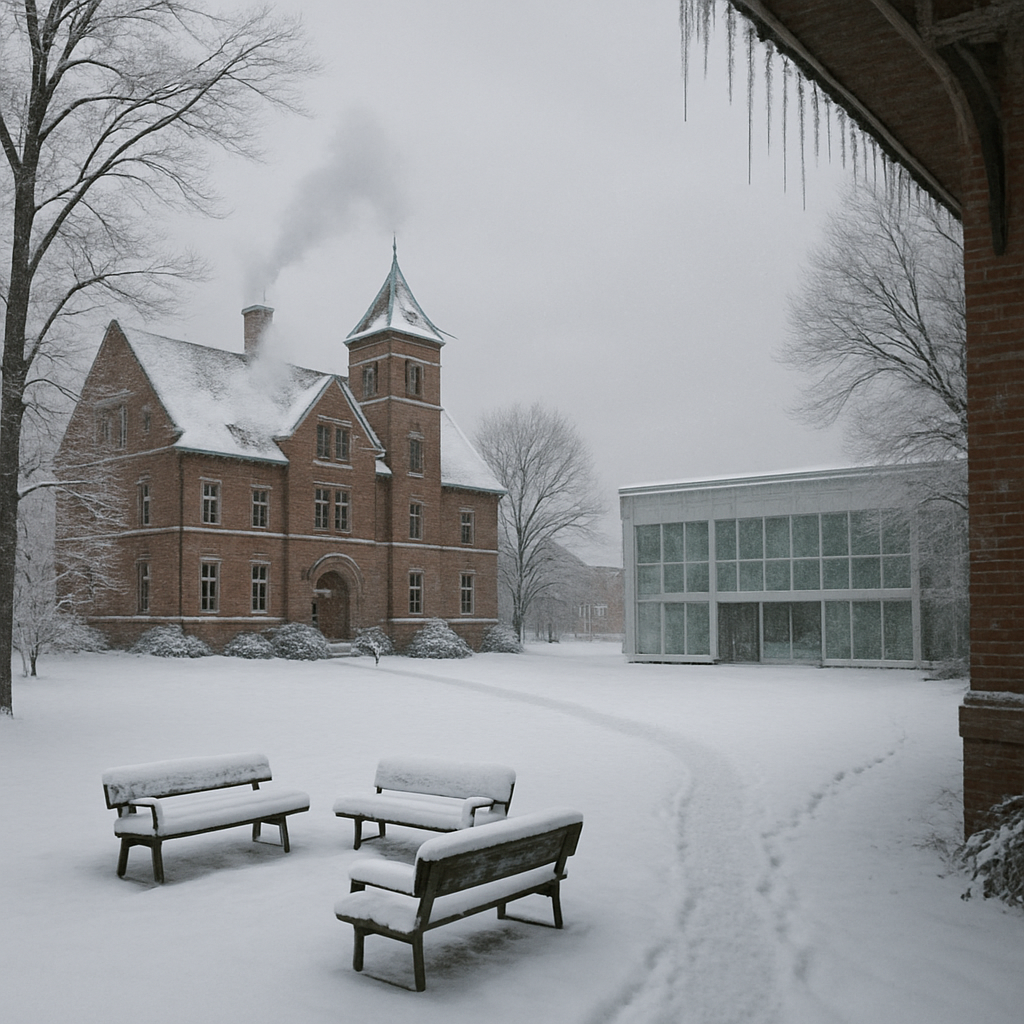
This winter is ranking among the coldest seasons on record, with December 2025 recorded as the fourth coldest December in the Philadelphia region this century.1 For leaders responsible for facilities and operations across higher education, that statistic carries real operational weight. Prolonged cold isn't just uncomfortable. It exposes vulnerabilities in buildings, infrastructure, and systems that were never designed for sustained low temperatures.
As temperatures plummet across the Mid-Atlantic, New England, and the Midwest, the infrastructure of our higher education institutions faces a silent, expensive threat: pipe freeze.
Why College Campuses Are Especially Exposed
College and university campuses face higher pipe freeze risk than many commercial properties due to a combination of factors.
Common contributors include:
-
A mix of modern and legacy buildings
-
Historic structures with outdated insulation or mechanical layouts
-
Long pipe runs in perimeter walls and unconditioned spaces
-
Shared sprinkler and domestic water systems across multiple buildings
Facilities teams are usually aware of these vulnerabilities. The same buildings and mechanical rooms tend to raise concerns every winter.
Freeze risks increase significantly during winter breaks. When dormitories, fraternities, sororities, and academic buildings sit vacant, water in sprinkler and domestic systems stops moving. That lack of circulation allows water temperature to fall faster, especially in perimeter walls, attic spaces, and mechanical chases. Static water freezes more easily, and once it does, damage follows quickly.
The "Snake Bit" Reality: The True Cost of a Burst Pipe
Anyone who has been "snake bit" by a pipe freeze failure before does not need convincing. They know a burst pipe is rarely a small event.
It’s a flood, often in the least convenient place possible.
Typical consequences include;
-
Repair and remediation costs exceeding $100,000 for multi-story facilities
-
Flooding in laboratories, libraries, archives, or residence halls
-
Loss of research materials, equipment, or historical records
-
Building closures and extended downtime
Water doesn’t care what’s valuable, and it rarely stops where you want it to.
Why "Better Than Prayer" Isn't Enough
Most campuses already take winter precautions. Heat is maintained. Walkthroughs are done. But many property managers rely on reactive measures or less effective alternatives. You may have air temperature monitoring (like Nest thermostats) or heat tape installed. However, as industry experts note, "heat tape is often only slightly better than prayer" because it is difficult to tell if the breaker has been tripped or if the tape is actually functioning.
The fundamental flaw in standard monitoring is that it tracks air temperature. But pipes don’t freeze when the air gets cold, they freeze when the water inside them freezes. Relying on air temperature is simply chasing the wrong variable.
Protection by Connection: The Salamander Solution
Pipe freeze prevention works best when you monitor the water itself. Salamander was built around that idea.
How it works:
- Water-Direct Monitoring: Unlike air sensors, Salamander’s patented system monitors the water temperature directly inside your fire sprinkler system in real-time. The Salamander Reservoir works in both dry systems and wet systems.
- Real-Time Alerts: Battery-powered sensors communicate wirelessly to a gateway via a secure RF connection. If water temperature hits a dangerous threshold or if water is detected where it shouldn't be (such as in a dry pipe valve), an alert is sent via email and text in real-time.
- Proactive Prevention: This allows your team to intervene, turning on heat or draining a drum drip, before a pipe bursts.
Fix a problem before it turns into an incident report. No heroics required.
Secure Your Uptime Competitive Advantage
For university housing corporations and facility managers, proactive investment is about more than just avoiding a mess; it is about uptime as a competitive advantage. By investing in a system that protects the structure during vacant winter months, you mitigate the need to budget for future repairs and remediation.
This winter, don't wait for the frantic Sunday morning call about a flooded dormitory. Move beyond reactive emergency maintenance and embrace protection by connection.
Ready to protect your campus?
1. MediaNews Group. (2026, January 2). Goodbye to a dreary December in southeastern Pennsylvania. Central Bucks News. Retrieved from https://centralbucksnews.com/news/2026/jan/02/goodbye-to-a-dreary-december-in-southeastern-pennsylvania/